Radar and camera track a drone over an industrial facility

Drone protection project for your facility — $2,500

The project is prepared by a Russian company that works in drone protection.

We select the equipment for your facility and budget, draw the placement plan and write an estimate with a price for every line. Before you buy, you know the exact models, the full cost and the delivery time.

The project is a document you can use to buy the equipment from us or from any other supplier. The specification names the manufacturer and the exact model of every device: it can go out for comparison or to tender. The plan marks where the sensors will stand, which areas stay uncovered and why. You see it before the purchase.

What the project includes

  1. Facility analysis. We study the source data, the layout and the protection tasks. We identify the areas that need special attention. We fix which drones the system must detect: an aircraft that broadcasts its position, an ordinary control link or a drone with no link at all.
  2. Technical solution and placement plan. We select the protection equipment, show on the plan where it will stand and explain the choice. We take into account the security systems already at the facility.
  3. Specification and estimate. We name the model and manufacturer of every device, break the cost down by item — equipment, delivery, installation, setup — and give the delivery time.

How the work goes

  1. You send a plan of the facility, a few photos and a description of the task. If there is no plan, a satellite image with marks will do.
  2. We clarify: what we protect, which drones you expect, whether you fly your own drones, which security systems are already at the facility.
  3. We prepare a preliminary plan and a budget guide. We show what each sensor sees and what it misses.
  4. We agree the composition and the budget. If it has to be cheaper, we remove lines and say what you lose with each.
  5. We hand over the final project: a note, the plan, the specification, the itemised estimate and the acceptance programme — which test flights we run and what counts as a successful alarm.

Microphone drone detection — from $1,300

Propellers make noise on every drone. Microphones hear each one — this is the layer a site most often starts with.

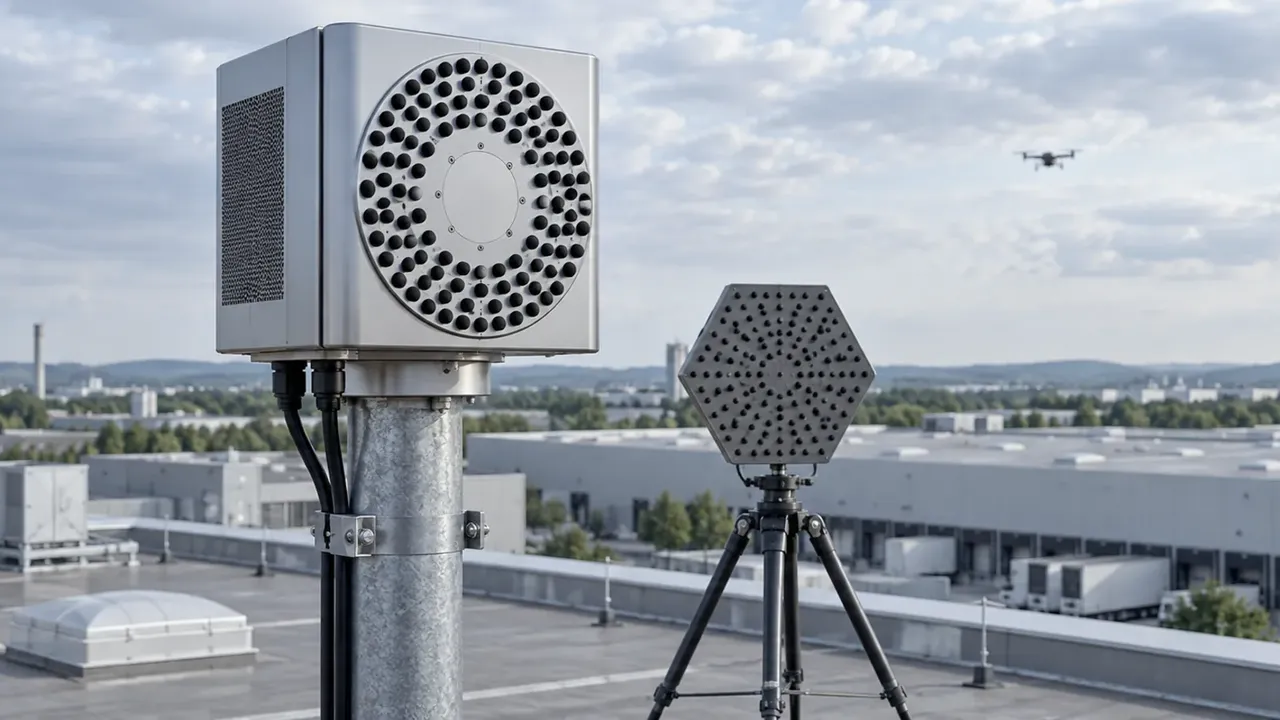
A microphone node on a mast and an array on a tripod on a warehouse roof
A node on a mast and an array on a tripod: two ways to listen to the sky over a warehouse
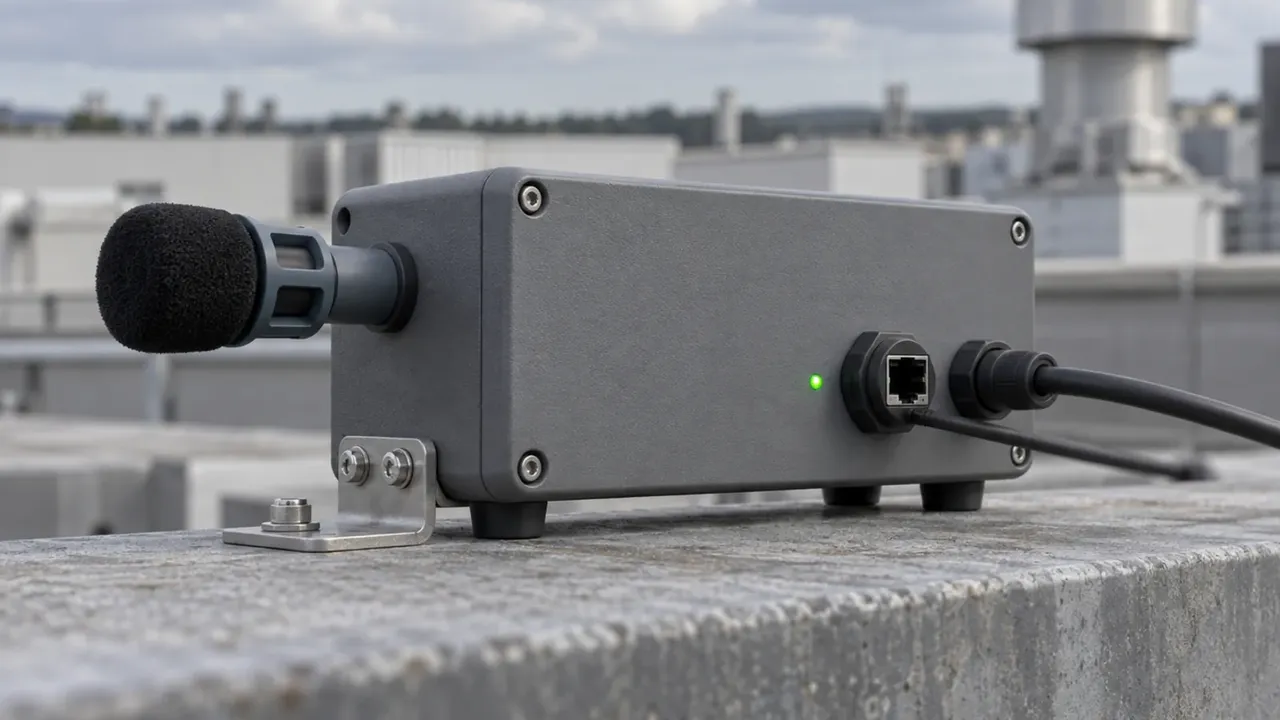
A compact single-microphone sensor on a roof parapet
A compact single-microphone sensor covers a small area
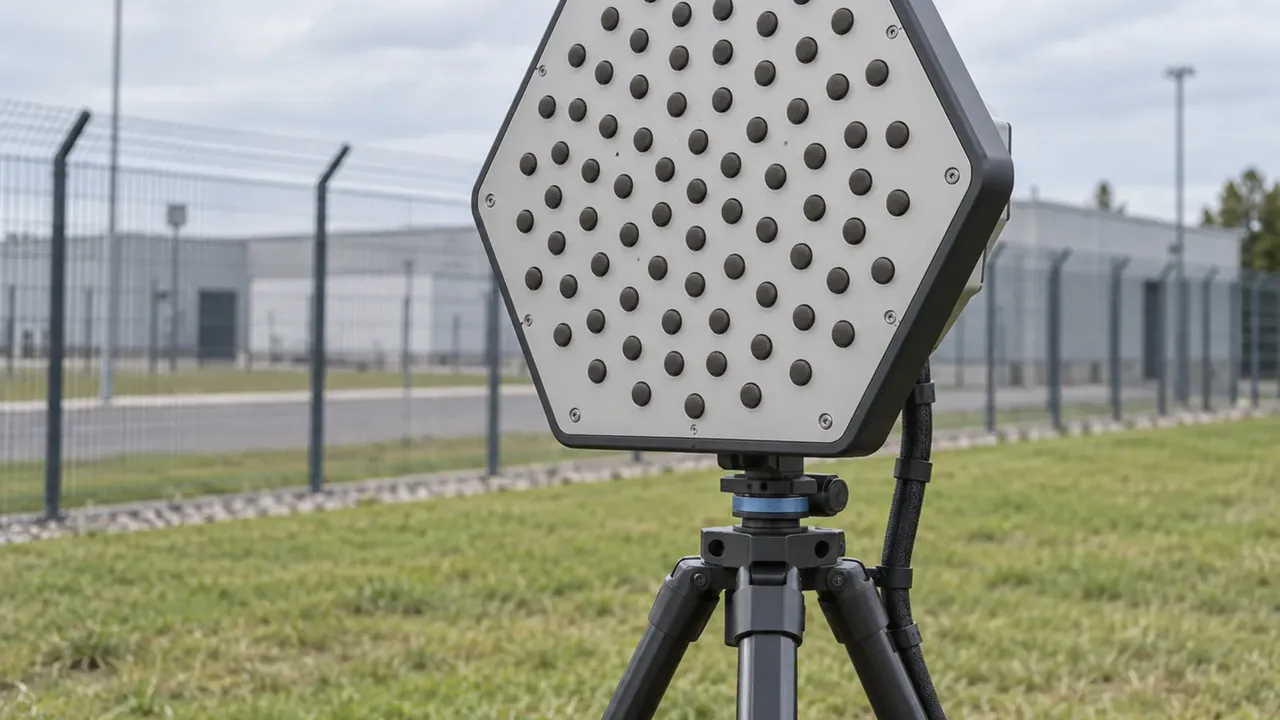
A hexagonal microphone array on a tripod by the fence
An array by the fence shows which side the drone is coming from
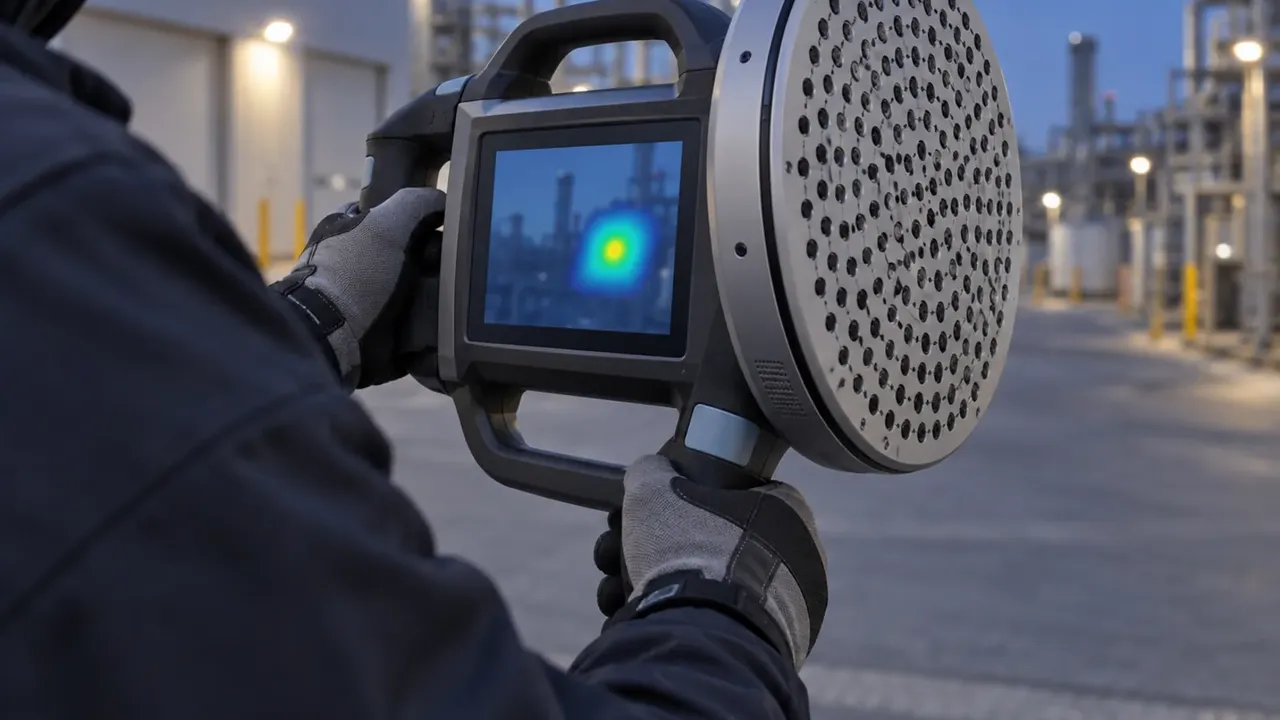
A guard holds a handheld acoustic device with a screen
Handheld device: the guard points it at the sky and sees the sound source on the screen
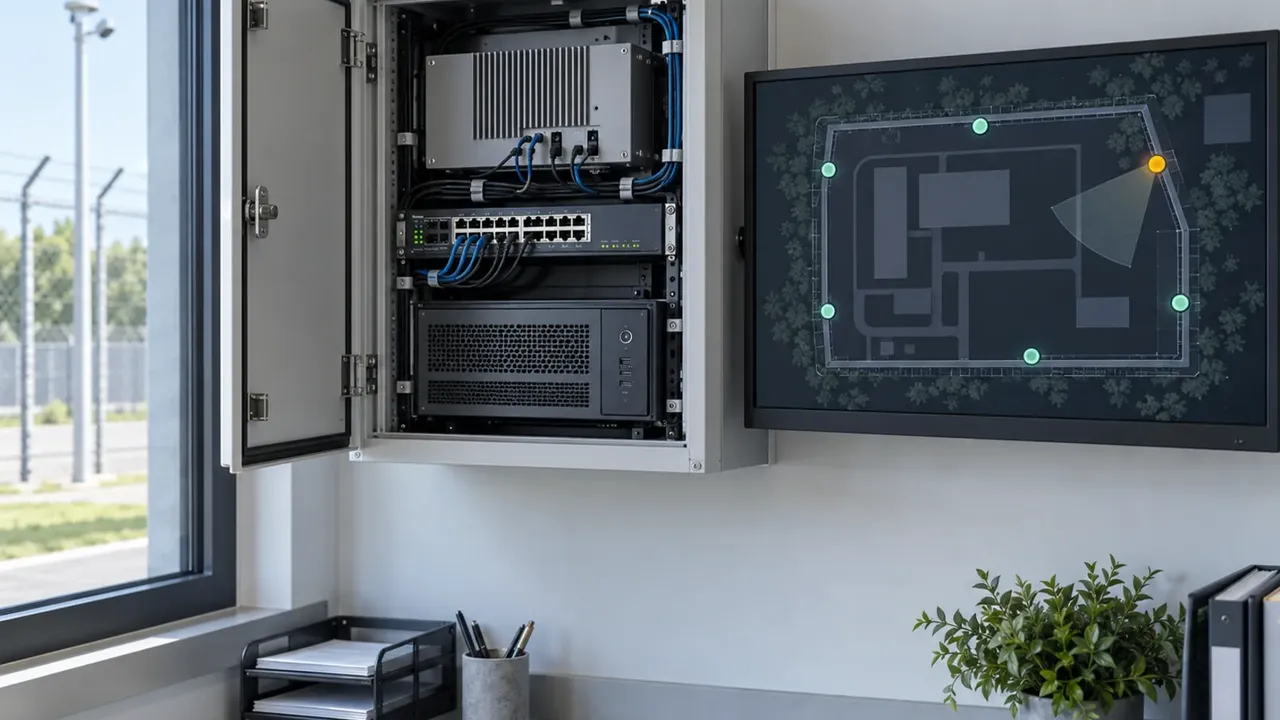
A computer cabinet and the facility plan on the guard's screen
A computer in the guard room collects the alarms and marks the drone on the plan
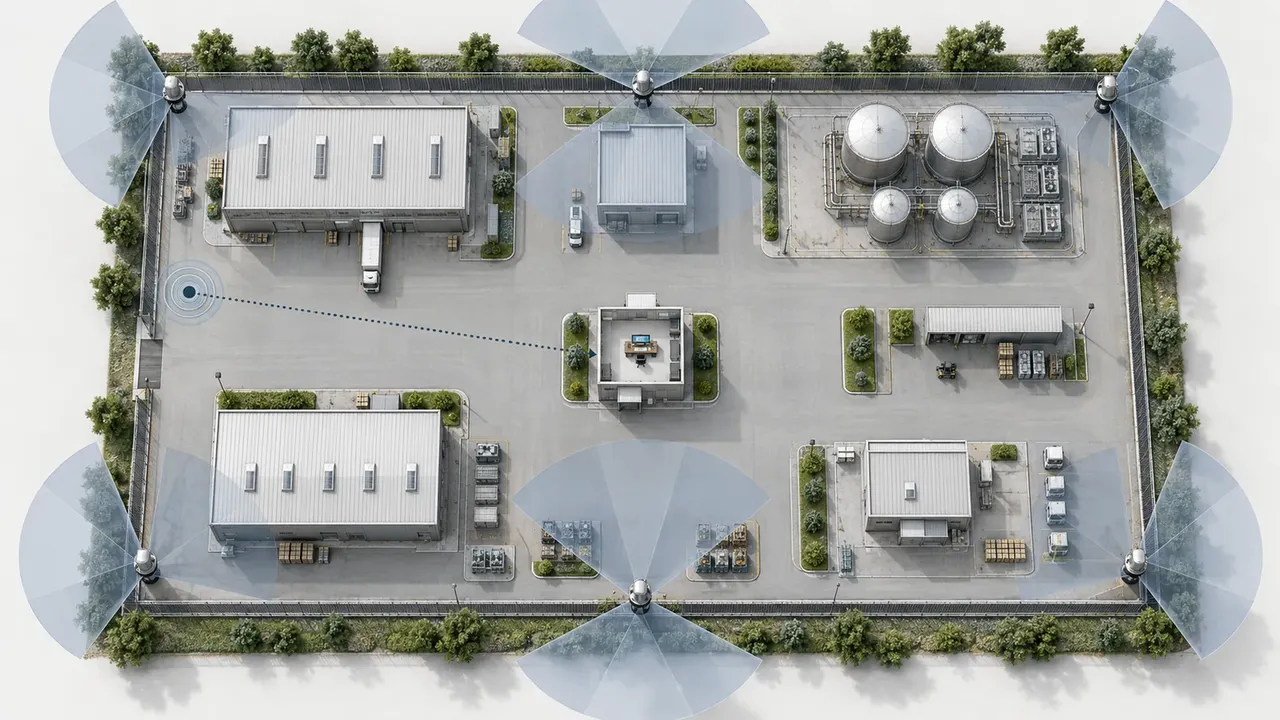
The facility from above: nodes along the perimeter and the guard post in the centre
Facility layout: nodes along the perimeter, a computer in the guard building, the drone on the plan
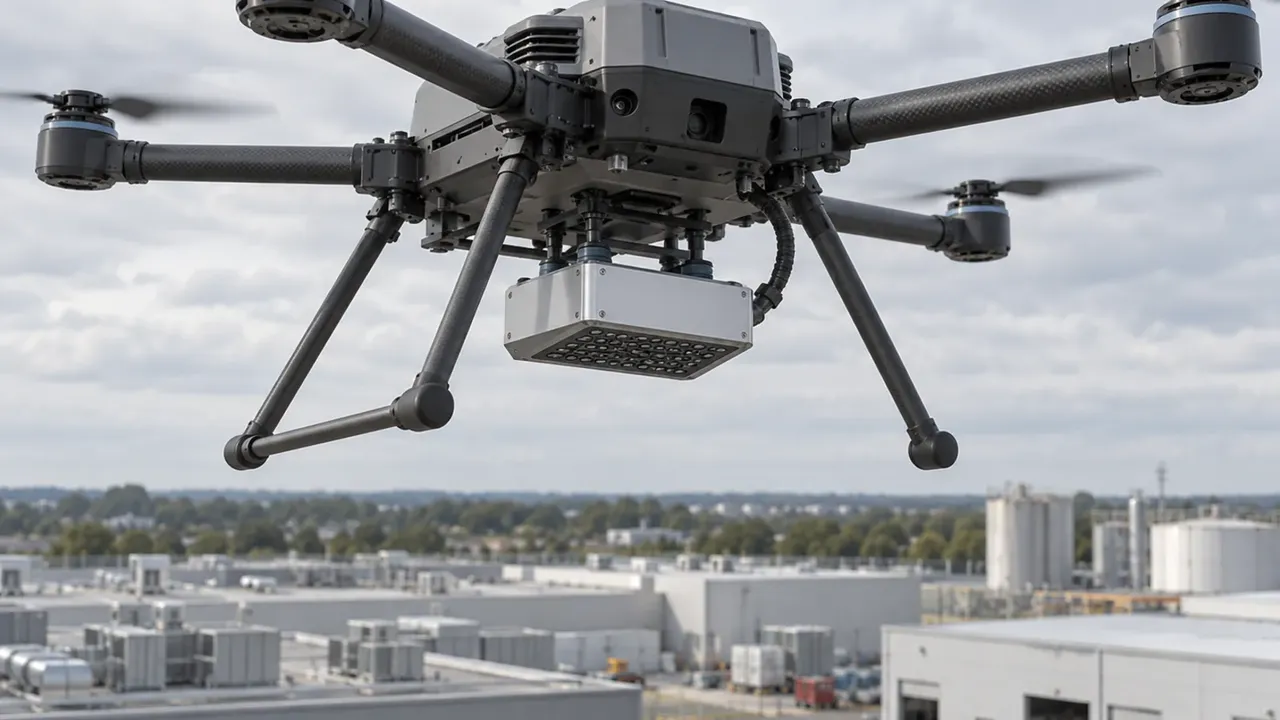
A microphone module under a scout drone over an industrial site
A module under your own drone hears other drones where microphones cannot be placed on the ground

A drone on a fibre-optic tether, a drone flying a recorded route, a drone with its link switched off — a microphone node hears them just like an ordinary one. The software separates propeller noise from vehicles, wind and birds, and the guard post receives an alarm with the direction to the drone.

It works the same at night and in fog: sound needs no light. The recordings stay with you — the computer stands in the guard room.

The first layer costs from $1,300, and the site is heard from every side. A signal sensor is added when you need the drone model and the controller's position. A radar — when strong wind and rain shorten the microphones' range more than you can accept.

Select microphones for my facility

Send a plan of the facility. We show how many nodes are needed, where to place them and what it costs.

How it works on site

  1. Nodes along the perimeter. Microphone nodes go on roofs, masts and the fence every 300–600 m — every side of the facility is within earshot.
  2. A computer on site. The nodes connect by cable or over your network to a computer in the guard room. It collects the alarms, marks the drone on the plan and keeps the recordings with you.
  3. Alarm to the guards. The post receives the alarm and the direction, the camera turns towards the sound and shows the drone.

How many nodes you need

Enter the length of the facility boundary. Nodes are placed every 300–600 m.

A quiet drone is heard closer — take the upper figure. The number of nodes goes into the request together with the perimeter.

What each layer sees

SituationSignal sensorRadarMicrophones
The drone transmits nothing: fibre-optic tether, recorded routeDoes not seeSeesHears
Drone model and controller locationShows, if the drone transmitsNoNo
Night and fogWorksWorksWorks
Strong wind and rainWorksWorksHears closer
Running equipment nearbyStrong signals may interfereWorksNodes are placed away from the noise
BirdsDoes not confuseMay confuse; checked with a cameraSoftware separates them; checked with a camera
Price from$1,649$15,300$1,300
Range
A small drone in a quiet place is heard at 100–300 m; in wind above 8 m/s and next to running equipment, several times closer. A heavy fixed-wing drone is heard several kilometres away. These are vendor figures and field tests; at your facility we verify with a test flight.
Noise
Wind, rain and running equipment shorten the range. We place the nodes away from ventilation and compressors and higher — on a roof or a 10–12 m mast, as in large sensor networks.
Quiet drone
A quiet drone is heard closer than a loud one. For it the nodes are placed more densely: every 300 m instead of 600.

Equipment and prices

Compact sensor

Vektra Ear

One microphone and an alarm to the guard post. For a wall, a roof or a parapet.

What you get

  • A unit with one microphone in an outdoor housing, a bracket for a wall or parapet, power supply.
  • An alert to the guard post over your network: time, direction to the sound, recording.
  • Covers a small area: a yard, an entrance, the roof of one building.

from $1,300

Node with direction

Sonaris Node

Dozens of microphones show which side the drone is coming from.

What you get

  • A node of dozens of microphones in an outdoor housing, a bracket for a mast or roof, power supply, cable to the post.
  • The built-in software tells propellers from cars and birds and gives the direction to the drone.
  • Several nodes combine on one guard screen; we show where to place them on the plan.
  • Installation, guard training and a test flight check — separate lines.

from $5,600

Module for your own drone

Wingear Module

Hears other drones in flight where microphones cannot be placed on the ground.

What you get

  • A microphone module with a mount for your drone, battery, a tablet showing the direction to the sound.
  • The operator sees on the tablet which side the foreign drone is on.
  • For large sites and temporary grounds; your own drone is not in the kit.

from $4,800

Handheld device

Nembris Patrol

The screen shows the sound source. For patrols, events and checking an alarm.

What you get

  • A handheld device with a screen, battery, charger, case.
  • The guard points the device at the sky and sees the sound source as a spot on the screen.
  • Checking an alarm from the nodes, patrolling, an event; does not stop the drone.
  • On-site training.

from $7,800

Large array

Ostriva Array

Hears a drone earlier than a single node and passes the direction to the camera.

What you get

  • A large microphone array, mast or bracket, power supply, cable to the post.
  • Software for the guard's computer: direction to the drone, alarm log.
  • The direction goes to your pan-tilt camera — the setup is part of the proposal.
  • For open ground where a drone can come from any side.
  • What we need from you: a spot with a clear view, power, network to the post.
  • Acceptance by a test flight from three sides; installation and training — separate lines.

from $16,000

Kit for a facility

Aurion Field

Four nodes and a computer on site. Six or ten nodes for a large territory.

What you get

  • Four nodes with brackets and power supplies, a computer for the guard room, software with the site plan.
  • On the guard screen: alarm, direction, drone on the plan, log; recordings stay with you.
  • Design on the plan: where the nodes stand so that every side is within earshot.
  • Installation on roofs and masts, cables to the post, setting up the site plan.
  • Guard training and acceptance: test flights from different sides, what is heard and from what distance.
  • The six-node kit — price by the plan; ten nodes with a computer — from $67,000.
  • Separate lines: delivery, installation, connection to your cameras, maintenance.

from $29,000

Anti-drone roof protection — $250/m²

The roof is the most common order. We cover equipment, tanks, a facade, a perimeter and a whole building the same way.

We design and install a protective screen where a drone strike would cost the most: over the roof, a transformer or a tank, along the facade or around the perimeter.

What is included

  1. Design. We define what to cover — the roof, equipment, a tank, the facade or the perimeter — the geometry of the structure, the mounting points and the required distance from the protected object.
  2. Frame and anti-drone net. The mesh is only part of the system. We calculate the supports or frame, the cables, the fixings and the installation scheme. The mesh is chosen for the dimensions, the operating conditions and the task: polymer, polyamide, metal or other, by service life and budget.
  3. Manufacture, delivery and installation.

If simple local protection is enough, we keep the structure simple. For industrial facilities we design a protective enclosure with design documentation to the Russian code SP 542.1325800.2024.

Get a layout and a quote

Send a plan, dimensions or a few photos of the facility. We show which structures fit, what has to be covered and what manufacture and installation will cost.

What can be protected

Roof
net over the whole roof or part of it
Rooftop equipment, transformers and substations
canopy or protective enclosure
Tanks and process units
mesh dome or separate envelope
Facade
vertical protective screen
Perimeter
net along one or several sides
Warehouse, hangar or whole building
protection from above and from the sides
Several critical zones
separate structures at one facility

Start with the roof

If full protection of the facility is too much for now, we cover the most vulnerable part. The structure can be extended to other zones later.

What the protection looks like on site

Tanks
dome on supports around a group of tanks
Warehouse roof
net over the whole roof
Substation
canopy over transformers and busbars
Rooftop equipment
protective enclosure over the units
Get a layout and a quote

Get the equipment list and quote

One contact is enough; we sort out the rest when we talk.

Request form

Three questions — and before you send anything, we show what fits your facility.

What are we protecting
Area
What you need
What you are interested in
How should we reply?

What else goes on a site

The project, microphones and the net cover the main task. The rest is added for a specific site; the most radical option is the interceptor.

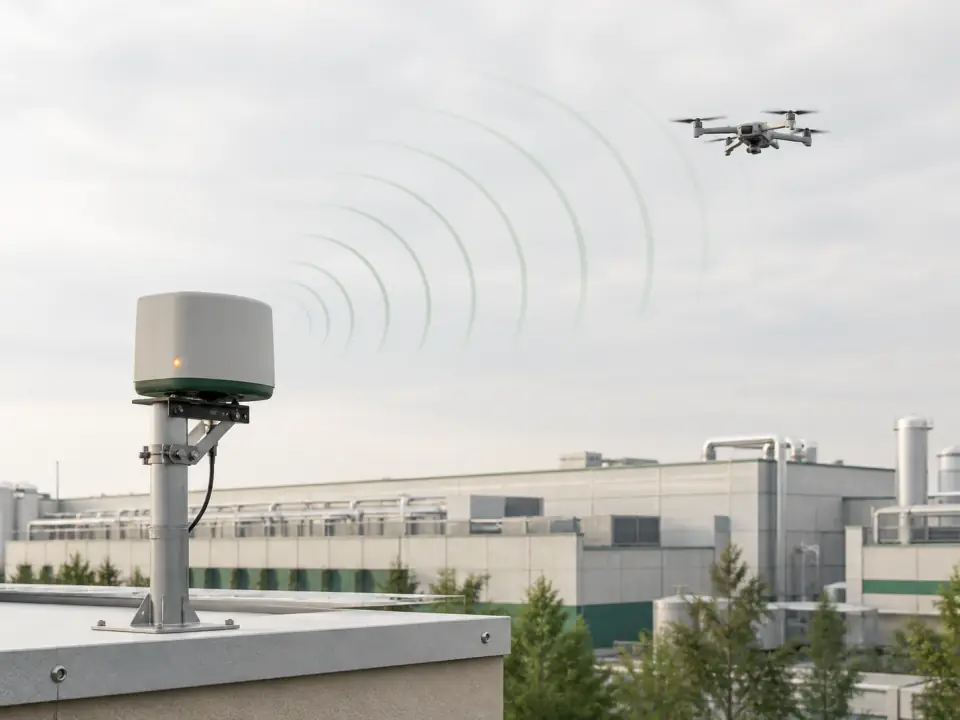
A signal sensor detects a drone over an industrial facility

Signal sensor

Finds the drone signal

The sensor picks up the drone's control link or video feed and sends an alert. If the drone transmits nothing, you need a radar.

Use
on site or with a mobile team
Note
a drone with no active link can slip past
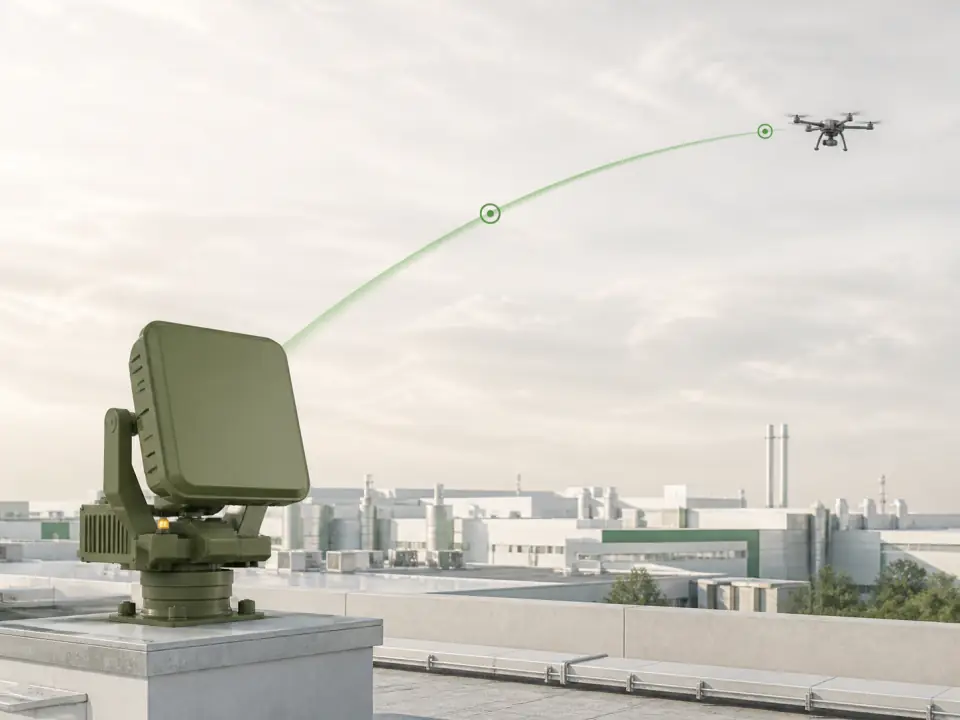
A radar shows a drone flight over an industrial facility

Radar

Shows the drone's flight

The radar sees the drone in motion and tells the camera and the guards where it is.

Use
in open areas and on large sites
Note
buildings, hills and drone size change the range
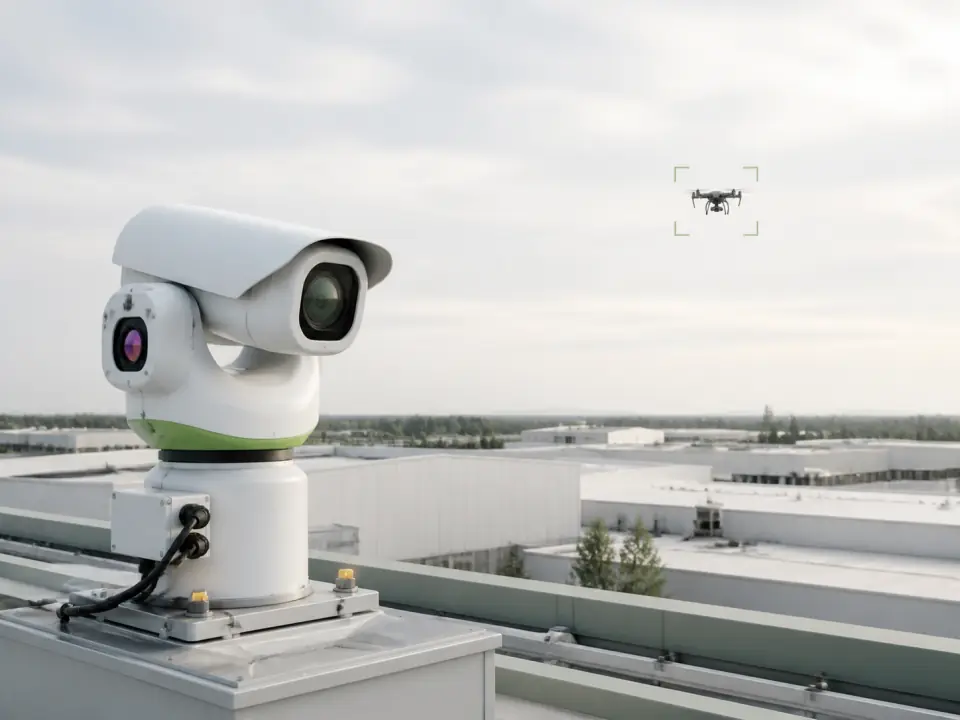
A pan-tilt camera shows a drone over an industrial facility

Camera

Shows the drone on screen

The pan-tilt camera gets the drone's location, finds it and saves the recording.

Use
to check an alert and record it
Note
fog, rain, snow and a blocked view spoil the picture
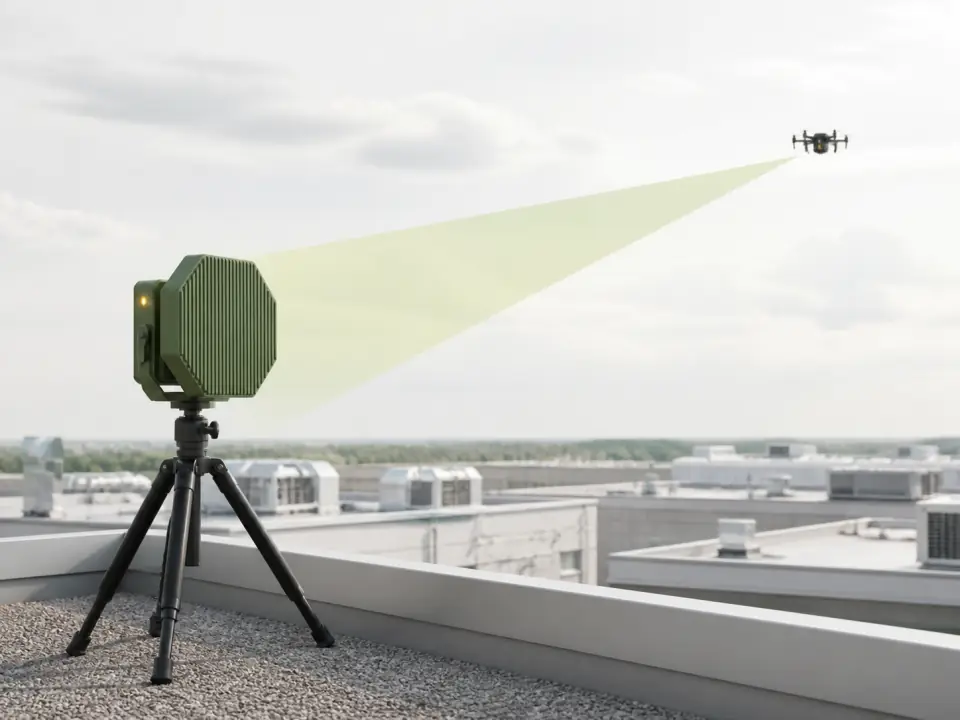
A device aimed at a drone to jam its control link

Jams control

Jams the drone's control link

The operator first confirms the drone is hostile, then aims the device at it. The reaction depends on the drone and how it is programmed.

Use
in front of what needs protecting
Note
the result must be checked by radar or camera
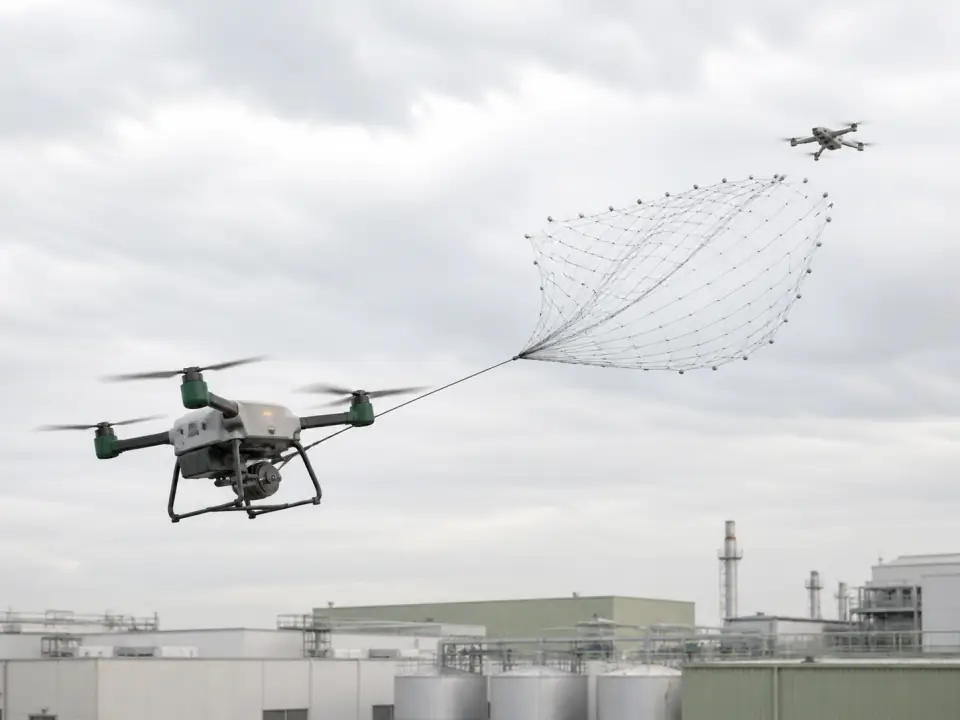
An interceptor drone fires a net to stop another drone

Interceptor drone

Chases and stops the drone

The radar tells the interceptor where to fly. One interceptor catches the drone in a net, another stops it by collision.

Use
for drones flying with no link
Note
how many drones can be stopped at once depends on the kit

Protection by facility size

Compact facility: office, shop, private house — up to 1,000 m²

One sensor on the building is enough: it reports a drone that broadcasts its position and shows it on a map. Budget from $1,649. A drone without such a broadcast is picked up by a signal sensor, from $7,500, or heard by a microphone unit, from $1,300.

Small facility: warehouse, depot, estate — 1,000–10,000 m²

Usually one or two sensors and an alert at the guard post are enough. Starting budget from $1,649. A drone that transmits nothing will slip past such a kit; for that we add microphones or a radar.

A single zone on the site: roof, transformer, vehicle yard

When one spot needs protection rather than the whole grounds, a protective net goes over it with a sensor nearby to warn the guards. The price follows the net area and the site plan.

Medium facility: plant, logistics centre — 10,000–100,000 m²

Two to four sensors around the grounds, a camera to check alerts, a screen at the guard post. Buildings and metal block the view, so we start with the site plan and work out how many sensors you need and where they go.

Large facility: fuel depot, power station, port — 100,000 m² and up

Signal sensors, a radar, pan-tilt cameras and one shared security screen. Critical zones get jamming devices or protective nets. Equipment and price are matched to your facility; such systems start at roughly $180,000.

Temporary site: construction, event, mobile team

A portable kit on a stand or a vehicle is set up in 30–60 minutes and taken to the next site. Suits a one-day event or a facility that moves.

What drone protection costs

Microphones and the net are described above. Here are the other solutions: tick what you need, the total adds up by itself.

See the drone

Aervanta Scout

Two units: carried and on site

One unit goes on patrol, the other stays on site. The map shows the drone and the controller location if the drone broadcasts this data itself. A drone without such a broadcast will not be seen.

from $1,649

Celyra Watch

Sensor on site

Stands at a warehouse, plant or open yard and reports a drone signal. The stop unit is not included in the price.

from $7,500

Norevia Guard

Sensor on site

Watches the signals around the site around the clock and tracks up to 30 drones at once. Runs from mains or battery. The standard kit only detects drones.

from $19,650

See and stop

Talora Ranger

Hand-held unit

A guard carries the unit and sees where the drone signal comes from. It can also jam control. According to the seller, it detects a drone up to 2 km away and jams the link up to 3 km.

from $2,924

Veyrion Shield

Kit: sensor and stop unit

Kit: the sensor detects the link with the drone and reports it to the guards, a separate unit can jam the control link. The sensor alone is from $2,399.

from $12,897

Valtrix Horizon

Kit

Shows the drone and the controller location, then tracks several drones at once. According to the seller, it detects a drone up to 10 km away and can jam control up to 3 km.

from $22,500

A system for the whole site

Aegivox Dome

Sensors, radar and cameras on one screen

Gathers the sensor, radar and camera feeds on one guard screen. The equipment set is chosen per site, so the final price varies.

from $180,000

Stop the drone

Voltrex Hunter

Interceptor drone

Launches in under five seconds, finds the other drone with its camera, chases it and downs it by collision. Claimed speed up to 420 km/h. Each use needs a new interceptor.

$6,999

29 drone protection solutions

Two or three solutions at different prices for each task, six for microphones, five for nets. We removed a hundred similar devices: choosing got easier.

What you need

Price

Questions and answers

Project, price and purchase

What budget does drone protection start from?

The price depends on how the system detects a drone. A receiver that sees drones broadcasting their position costs several times less than a radar — and does not see everything. Starting figures on this site: a microphone unit — from $1,300, a simple solution with a map — from $1,649, a stand-alone sensor — from $2,399, a sensor that works at the facility around the clock — from $7,500, a kit with a camera — from $15,810.

These are equipment prices. Delivery, design, installation, connection to your cameras and security-staff training are quoted as separate lines. We disclose the manufacturer and model before the order — then the price can be compared with the market. For reference: a European receiver of the same class costs from €3,000, and Chinese portable detectors on export marketplaces run from $300 to $1,000, but these devices differ in composition and verification.

What must a proposal include before purchase?

A specification: the manufacturer and exact model of every device, quantity and purpose, declared and calculated detection zone, placement on the site plan, software and subscriptions, power and network requirements. Separately — the cost of equipment, delivery, installation, configuration, training and maintenance.

Before the order we fix what the system must detect: a drone broadcasting its position, a regular control link, the video feed from the drone's camera, an aircraft with no radio link, your own drones. And we agree on acceptance: which test flights we perform, where detection is checked, what counts as a triggered alarm, which limitations remain after installation.

Why does the catalogue use working names for the equipment?

A card on the site describes a class of solution. You receive the manufacturer, full name and specifications before purchase, together with the list and prices.

Before paying, ask for the manufacturer's exact part number, the datasheet, country of origin, certificates, software version, licence terms, warranty and confirmation of the distance at which the device sees a drone. Without this data no offer on the market can be verified — ours included.

Can I start with a small sensor instead of an expensive system?

Yes, if the task is basic warning and you understand what such a sensor does not see. A simple receiver shows only drones that broadcast their own position. A signal sensor detects known control and video links; an aircraft with no radio exchange passes it by.

A small sensor works as the first layer for patrols, a warehouse, a small facility or monitoring authorised flights. If you expect autonomous or modified aircraft, you need an independent channel: microphones or a radar, and a camera to confirm the target.

Detecting a drone

Will the system see a drone that flies autonomously and transmits nothing?

A signal sensor will not notice an aircraft that transmits nothing it recognises. This is the main limitation when choosing a system.

For such drones microphones or a radar are installed: microphones hear the propellers, a radar sees the object itself by its reflected signal, whatever the drone transmits. After a radar alarm, a camera or thermal imager confirms that it is a drone. No sensor gives 100% detection: coverage depends on the radar model, the drone's size, hills, obstacles and placement.

How many sensors does a 30,000–50,000 m² warehouse need?

It cannot be worked out from the area alone. For such a warehouse, 2–4 sensors is a preliminary guide; the number depends on the shape of the site, building heights, metal structures, neighbouring buildings, radio background, mounting height, the directions to be covered and the chosen technology.

If aircraft with no radio exchange must be detected, the number of signal sensors does not solve the task: microphone nodes every 300–600 m or a radar are needed. The order: site plan → threat model → preliminary placement → coverage check with test flights. We show the number of sensors on the plan before purchase.

How do buildings, metal and hills affect detection?

They do, and differently. For a signal sensor, buildings and metal change how radio waves propagate and reflect. For a radar, the viewing angle, shielding by structures, hills and the drone itself matter. A visible or thermal camera needs a direct line of sight. A large rated distance does not yet mean continuous coverage of the facility at the same distance.

Sensors are placed after analysing the site, raised above the roof or onto masts and checked with test flights. At a complex industrial facility, several different sensors are usually more useful than one device for every direction.

Will heavy electrical equipment interfere with the sensor?

A difficult radio environment can degrade a signal sensor, but it cannot be assumed in advance that any transformer or electric motor ‘jams’ it. What matters is the actual interference spectrum in the bands the system uses, so we check the installation spot on site.

Before final placement we survey the radio-frequency environment and run a test. If a signal sensor is unreliable in a particular zone, we add an independent channel — microphones or a radar.

Does the system work at night, in rain and fog?

It depends on the sensor. A signal sensor needs no light. A radar does not depend on lighting either and is especially useful at night and in poor visibility; manufacturers call it all-weather, but the real distance and recognition accuracy are set by the model, the drone and the conditions.

A regular camera sees worse at night and in fog. A thermal imager shows the target without light, but fog, rain and snow degrade its image too. So the alarm of a critical facility must not depend on a video camera alone.

Verification and identification

Can our existing cameras be used to confirm a drone?

Sometimes, yes. A PTZ camera is suitable for checking an alarm if the system can receive its video and control pan, tilt and zoom, or show the operator where the target is for manual aiming.

Before the design we check the control protocol, video format, whether it can connect to the software, slew speed, optical zoom, field of view and night capability. An ordinary CCTV camera cannot always track a small, fast aerial target. We add a new camera only where yours is not enough.

Can a radar confuse a drone with a bird?

It can. A single radar return is not always enough to recognise a small target with confidence. So modern systems look at the trajectory, speed and the characteristic signature of rotating propellers, apply machine recognition, and cross-check a doubtful target with the signal sensor and the camera.

A doubtful alarm is confirmed by a second independent channel. The absence of a radio signal does not mean the target is a bird: an autonomous or silent drone emits nothing either.

How do you tell an authorised drone from an intruder?

Your own aircraft is entered in advance into the trusted list together with its available identifiers, operator, flight time and permitted zone or route. The system keeps showing it on the map but marks it as known and does not raise the same alarm as for an unknown target.

The position a drone broadcasts helps identify it but does not confirm that the flight is agreed: the system receives only the data the aircraft transmits. That is why your own drone goes on the list in advance.

Protection and stopping a drone

Can a drone be physically stopped?

Detection and stopping are different tasks. A signal sensor, a radar and a camera detect, track and confirm the drone. A small critical zone is closed physically — with a net on engineered supports.

Devices that disrupt control, throw off navigation or intercept a drone are a separate category. The result depends on the design of the specific aircraft: it may hover, return, change route or continue the flight. So such devices are installed together with a radar or camera — to see what happened.

What should be protected first at a fuel depot or a plant?

First the spots where a drone strike or surveillance costs the most. For a fuel depot these are the tanks, pumping units, transformers and control rooms. For another facility the list comes from its own risk review.

A net is placed over a small critical zone. It is an engineered structure with calculated supports, geometry and fixings; mesh of the right size is only part of it.

Portable systems and large sites

Can a portable system be used, and how long does deployment take?

Yes. Portable and vehicle-mounted kits are used at construction sites, ports, quarries, events and by mobile security teams. After relocation the system is checked again: a new spot changes the view, shielding by buildings and hills, communications, power and the fields of view of cameras or radar.

There is no single timing. A simple post on a stand — roughly 30–60 minutes. A system with a tall mast, radar, camera, its own network and an acceptance test takes several hours. We quote the exact time for the chosen configuration after the site survey.

What is included in a portable kit?

At a minimum — a detection sensor, a tablet or laptop with a map, autonomous power and a link to the security post. To confirm the target, a camera with daylight and thermal channels is added; to detect aircraft with no radio link — a mobile radar. In the large version all sensors feed one screen with an event log and a target map.

The composition is set by the threat scenario. Devices that stop a drone are not part of a standard kit: they are selected separately.

Is equipment needed at every field or across the whole site?

No. For a large distributed site we first identify the critical points: the warehouse, fuel facilities, transformer, control centre, loading area, machinery yard. Permanent sensors go there; remote areas are checked with a portable device when needed.

If drones must be seen continuously over the entire site, that is a continuous-coverage calculation that accounts for hills, distances and zone overlap. So we first decide what is needed: protection of individual assets, early warning along the perimeter, or surveillance of the whole area.

IT, data and communications

Will the system interfere with Wi-Fi and mobile networks?

A passive signal sensor suppresses nothing: it only receives and analyses signals. A camera does not affect communications either. A radar is an active device and transmits in its own band, so we assess its frequencies and compatibility with your equipment for the specific facility.

A device that disrupts drone control is a separate category: its very purpose is to act on radio channels. It is connected separately and switched on at the guard's command once the drone is confirmed.

Can all data be kept only inside the facility?

Yes, if the equipment supports a local mode. Some solutions work through a cloud service or a paid subscription; in the list we mark which mode each device has.

In the technical specification we fix in advance where the server and database sit, whether external internet is needed, where telemetry and video recordings go, how long events are kept and which external licences are required. Then flights, alarms and recordings stay inside the facility network.

Get the equipment list and quote

One contact is enough; we sort out the rest when we talk.

Short form

How should we reply?